
Blocked or undersized drains
The first thing to check and the cheapest to fix. Leaf debris, a lost strainer, or a building that grew without the drainage growing with it.
Drainage and guttersWater still standing on a flat roof 48 hours after rain is defined as ponding, and most manufacturers exclude ponding-related failure from their warranties. In St. Louis the usual causes are blocked drains, deflected decking, crushed insulation and additions built without slope. John Beal Roofing finds which one it is and prices the fix — cleaning, new drains, tapered insulation or structural correction. Free inspections. Call (314) 429-6000.
A flat roof is never actually flat. It is built with a quarter inch of fall per foot toward drains, and everything about the membrane's expected life assumes that water leaves.
When it does not leave, three things happen. The membrane sits wet and ages faster, dirt and organic debris build a biological layer that holds even more water, and every gallon adds five and a bit pounds of load per square foot to a deck that was designed for snow, not a permanent pond.
The first thing to check and the cheapest to fix. Leaf debris, a lost strainer, or a building that grew without the drainage growing with it.
Drainage and guttersSteel decking sags between joists over decades, and old wet insulation makes it worse. The low spot moves away from the drain and water follows.
Foot traffic to a rooftop unit compresses insulation into a permanent path. You can usually see the walk route in the pond outline.
Additions and re-roofs sometimes skip the taper package to save money. It is the single most common design cause we find on St. Louis buildings.
A run of new conduit or a wide equipment curb across the flow line dams water behind it. Cricketing behind the obstruction fixes it.
Gravel, silt and biological growth build a berm at the low edge. On older built-up roofs this alone can hold an inch of water.
Built-up roofing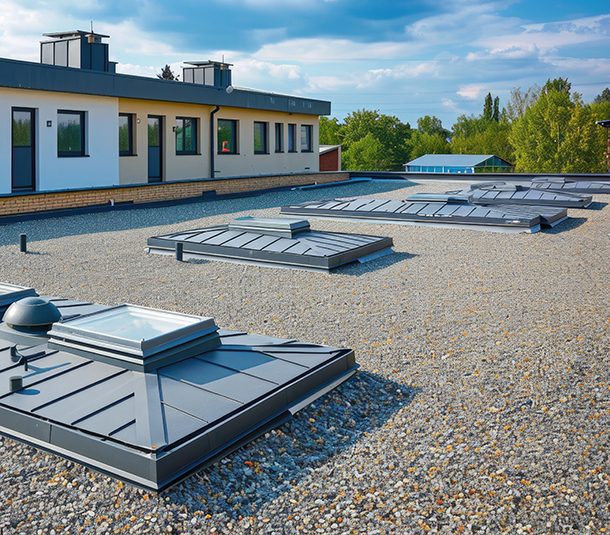
Warranty first. Read your manufacturer's terms — ponding is almost always an exclusion, so a leak in that area may not be covered even on a young roof.
Then load. Standing water weighs roughly 5.2 pounds per square foot per inch of depth, permanently, on a structure that was never designed to carry it.
Then the membrane itself. Constant saturation accelerates plasticizer loss in PVC, degrades seam adhesives and turns small punctures into open leaks.
And then the deck. Once water finds a seam, wet insulation spreads laterally, and a repair that was a few hundred dollars becomes a tear-off section.
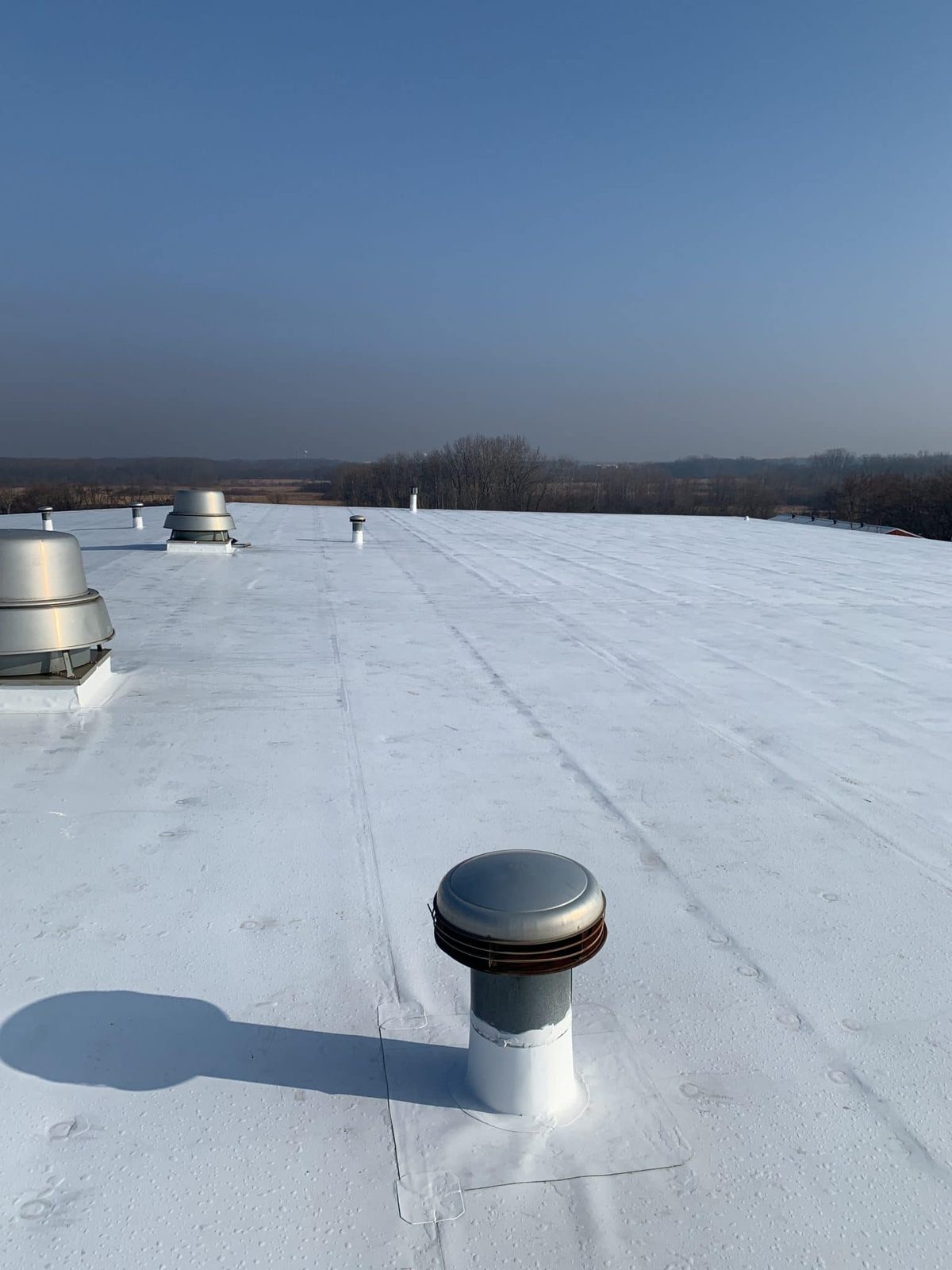
Related: tapered insulation in St. Louis — slope built into the insulation so water reaches the drains.
None after 48 hours of dry weather. That is the industry definition and the one your warranty almost certainly uses.
Often yes. Clearing drains, adding a drain, or installing a tapered insulation cricket in the low area solves most cases without touching the rest of the roof.
Rigid insulation cut in a slope, installed under the membrane to build fall where the structure has none. It is the standard fix for a dead-flat low area.
It rarely voids the whole warranty, but it usually excludes claims arising from the ponded area. Read the exclusions — we will read them with you.
We walk it during and after rain, mark the water line as it recedes, and shoot elevations where the pattern is unclear. Photos of an actual pond beat a survey every time.
Tell us about the property and a dispatcher will call to schedule. No cost, no obligation.
Commercial leaks do not wait for business hours. A live dispatcher answers around the clock and we get crews moving the same night.