
Seams and terminations
Every field seam probed, every edge and parapet termination checked. Seams and edges are where single-ply roofs actually open up, not the middle of the field.
A John Beal Roofing commercial inspection puts a technician on the deck to photograph seams, curbs, drains, flashing and penetrations, take moisture readings where the roof feels soft, and write up remaining service life with a repair-versus-replace recommendation. You get the photo report whether or not you hire us, and there is no charge. Free inspections. Call (314) 429-6000.
Most owners call for an inspection after water shows up inside. By then the question is not condition, it is damage. The inspections that save money are the ones done before that — after a hail event, before a lease renewal, or at the start of a budget cycle.
We inspect the same way whether it's a 4,000 square foot strip center or a 300,000 square foot distribution roof. Somebody walks it, photographs it, and writes down what they found instead of what they guessed.
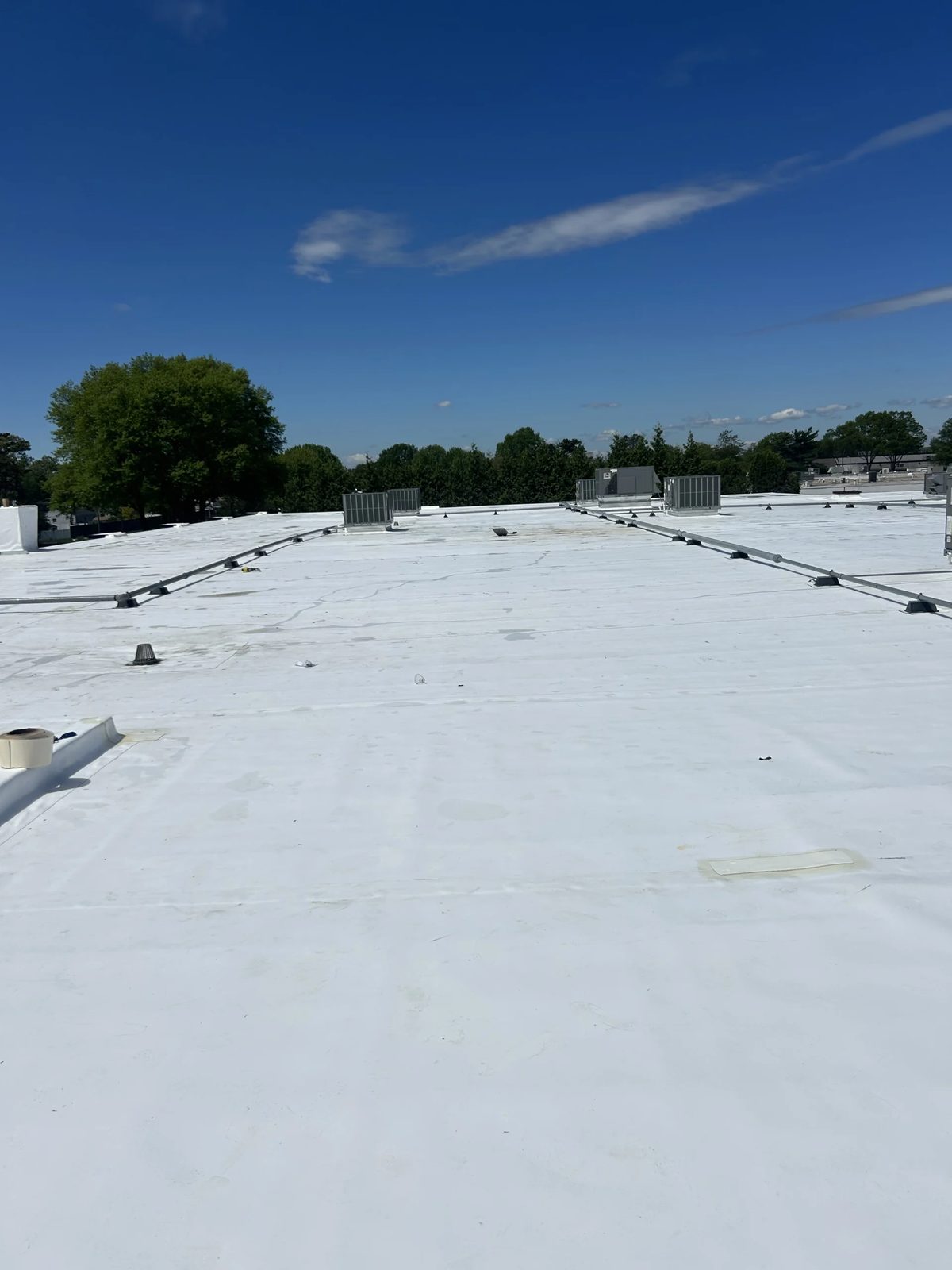
Every field seam probed, every edge and parapet termination checked. Seams and edges are where single-ply roofs actually open up, not the middle of the field.
Blocked drains and standing water shorten a membrane's life faster than sun does. We note ponding depth and how long it holds after rain.
Flat roof repairHVAC curbs, vent stacks, conduit and abandoned supports. On most commercial roofs the leak is at a penetration, not the field.
Where the deck feels soft we take readings to find wet insulation. Wet insulation does not dry out — it spreads, and it decides tear-off versus recover.
Rust on a metal deck, deflection between joists, spongy areas. These change the scope and they change the price, so they belong in the report.
The number that matters for planning: how many years this roof has left, and what maintenance buys you more of them.
Capital planning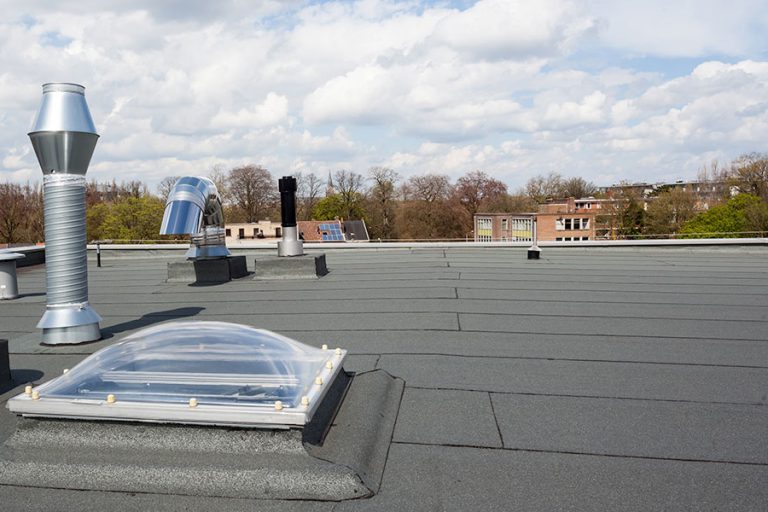
Dated photographs of every problem area, captioned so a board member who has never been on a roof can follow it.
A written condition summary with remaining service life, and a clear repair-versus-replace recommendation with the reasoning behind it.
If replacement is the answer, a line-item scope you can hand to two other contractors and get comparable bids back.
If it's a storm claim, the documentation written in the terms adjusters use — test squares, strike counts and dated imagery.
Yes, including the photo report, with no obligation to buy anything. We would rather be the contractor you call in three years than sell you a roof you did not need.
A small commercial roof takes under an hour on the deck. A large industrial roof or a multi-building campus can take most of a day, and the report follows within a few days.
Twice a year is the standard — spring and fall — plus after any significant hail or wind event. Most warranties require documented inspections to stay in force.
Where access is unsafe or the roof is enormous, yes, as a supplement. A drone cannot probe a seam or take a moisture reading, so it never replaces walking the deck.
Regularly. A sound roof with failing details is a repair, and saying so is how we end up doing the replacement when it is genuinely time.
Tell us about the property and a dispatcher will call to schedule. No cost, no obligation.
Related: commercial roof core sampling — the cut that verifies layer count, wet insulation and deck condition.
Commercial leaks do not wait for business hours. A live dispatcher answers around the clock and we get crews moving the same night.